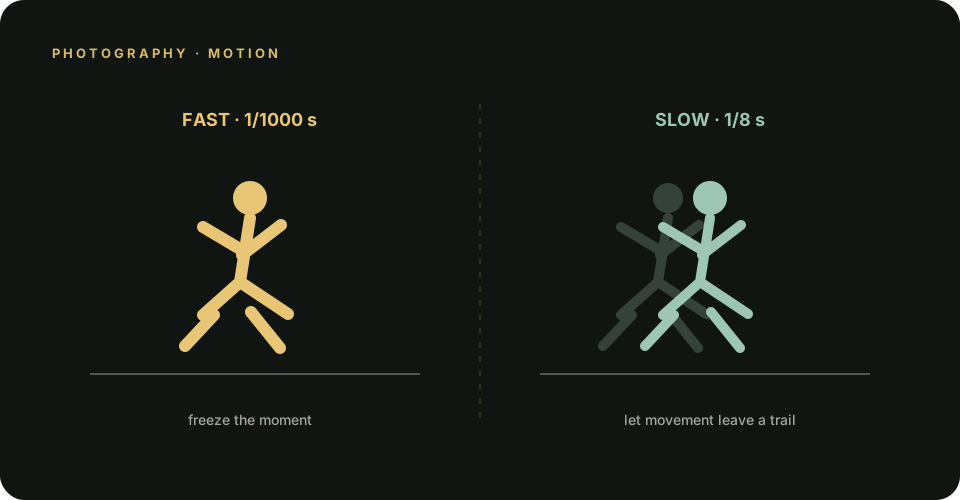
Shutter speed is the length of time a camera records light for one exposure. It affects both brightness and how movement appears. A fast shutter can make a brief moment look still; a slow shutter can turn motion into a visible trail.
Start with the movement
For a person walking, a moderately fast shutter may be enough. Running, sports, or birds in flight usually need a shorter exposure to reduce motion blur. The right value depends on how quickly the subject moves and how much blur you want to keep.
For flowing water, clouds, or vehicle lights, a longer exposure can create a smooth or streaked effect. Use a tripod or another stable support so that the camera itself does not move while the shutter is open.
Handheld camera shake
Camera shake is different from subject motion. It comes from small movements of the camera during the exposure. Image stabilization can help in some situations, but it does not freeze a moving subject.
Take a short burst or review a test frame at full size. If edges look smeared, use a faster shutter, improve support, or increase ISO to compensate for the reduced light.